ऐसी बानी बोलिए, मन का आपा खोय
औरन को शीतल करै, आपहुँ शीतल होय
| Standard Screen | Widescreen | Mobile |
| 800×600 | 1280×720 | iPhone-4 |
| 1024×768 | 1280×800 | iPad-Vertical |
| 1400×1050 | 1440×900 | |
| 1600×1200 | 1920×1080 | |
| 1920×1200 | ||
| 2560×1440 | ||
| 2560×1600 |
Rāga: Māḍha. Mērē gamakā tarānā
Bhāva: Paranārī tyāga nē pāpatyāganī prēraṇā
Prāṇī saba cētō, bāta lō ē tō,
dila viṣē utāra;
Tuma ātama tārī, sukha karanārī,
bāta hamārī dila viṣē utāra.
Pāpa na karanā, dukhasē ḍaranā,
haranā viṣaya kaṣāya;
Paranārīkō māta samajakara,
usasē lō dila haṭāya rē.
There are weapons, which are one better than another, but there is nothing greater than weaponless ahimsa

When he died from Saudharma, then he was born as a son of King satabala, the crest-jewel of the Vidyadharas, by his wife Candrakanta, in the West Videhas, in the province Gandhilavati, on Mt. Vaitadhya, in the country named Gandhara, in the city Gandhasamrddhaka. He was exceedingly strong, and was named ‘Mahabala’ because of his strength. Protected by guards and cherished, he gradually grew up like a tree. Gradually filled with all the arts, like the moon with digits, highly distinguished, he became a festival to the eye of the people. Continue reading “Fourth Incarnation as Mahabala” »
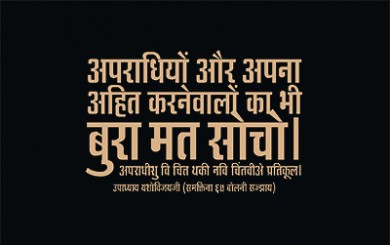
Neither think low of yourself, nor think low of others

A tiny thorn is picked with great difficulty